Why We Walk In Pink
Every day in Ghana, six women lose their lives to breast cancer. Over 4,000 new cases are diagnosed each year, and 70% of them are found at a late stage, when treatment is hardest and survival lowest. Behind each of those numbers is a mother, a sister, a friend, a daughter who might have lived longer had she been found earlier.
Breast cancer is Ghana's most common female cancer. It is also one of the most survivable, with survival rates above 90% when caught early. The gap between those two facts is the gap that Walk In Pink exists to close. The barrier is not treatment or technology. It is access. Access to screening, to information, and to the quiet confidence that your health is worth fighting for.
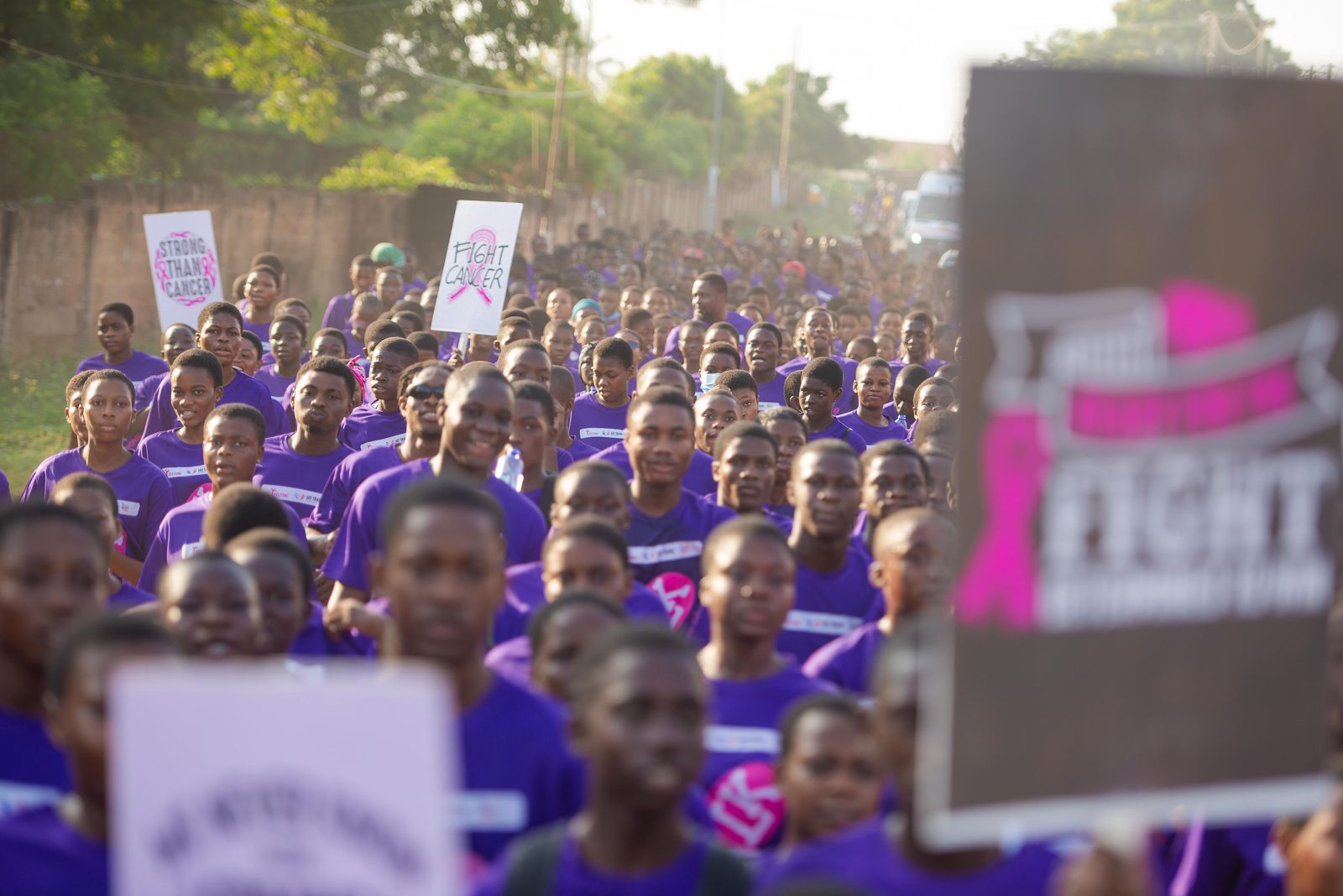
An estimated 80% of women in Ghana have never been screened. Among women of screening age, 67.7% have never had a single clinical check. Many have never been near a mammogram machine. Many have never been told what to feel for in a self-examination. Some fear the result more than the disease itself. Walk In Pink meets women where they are, in community parks, market squares, school grounds, and church compounds, and removes every barrier it can.
The foundation launched in 2022 with a single 8km walk through Teshie, Accra. Over 200 women were screened that day, many for the first time in their lives. By 2025, that number had grown to more than 1,000 women screened in a single day at Nungua Senior High School. Across four editions and four communities, we have reached over 2,200 women with free clinical screenings provided by The Trust Hospital, and the fifth community joins this October.
At Walk In Pink 3.0 in Aglorkpovia, 20 suspected cases were identified and referred, and among them was one man. Most could not afford medical care, some had sought help at shrines, and the cancer had spread by the time we found them. The foundation carried them through test after test to begin treatment and felt the full financial weight of follow-up care. That is what this movement is for. Not the walk itself, but what the walk makes possible, and what it still costs after the walk ends.
This is why we walk. Not for a single day, but for the sustained, year-round work of changing how Ghana's women relate to their own health. The 31 Days of Pink campaign, the Sponsor-A-Mammogram drive, the market screenings, the school quizzes, and the survivor stories are all part of the same answer to one question. What does it take to reach a woman who has never been screened?
Walk In Pink 5.0, in October 2026, sets a target of 1,500 walkers and 1,500 free screenings in a single day. It is the most ambitious edition yet. But the target was never really the point. The point is the woman who shows up not knowing what to expect, and leaves knowing something that could save her life.